
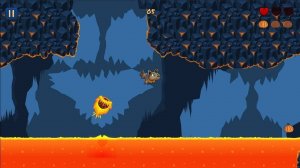
Cavern Logic Challenge
Developer: Void Pixel Core
Published: 2026-07-30
Updated: 2026-07-30
Reviews
Cavern Logic Challenge stands out for its clean design and gradual difficulty curve. The puzzles require genuine thought without feeling frustrating. Each stage introduces new patterns that keep the experience engaging across many sessions. The lack of timers and the ability to restart freely encourage experimentation, which is perfect for players who enjoy solving problems at their own pace. It is a solid choice for anyone looking for a calm yet mentally stimulating game.
Description
Core Puzzle Mechanics
At its heart, this game asks players to clear each stage by moving or removing pieces on a board. The challenge lies in choosing the correct sequence of actions to meet specific goals. Unlike games that rely on speed, this one rewards patience and observation. Each move changes the layout, so thinking ahead becomes essential. The mechanics are straightforward: click or tap a piece to select it, then perform an action to clear it or shift its position. This simplicity lets players focus on solving the puzzle rather than learning complex controls.
Stage Design Philosophy
Every stage presents a unique arrangement of pieces and obstacles. The difficulty increases gradually, introducing new patterns that require fresh approaches. Early stages teach basic moves, while later ones combine multiple elements that must be solved in the correct order. The design encourages experimentation: if one strategy fails, trying a different sequence often reveals the solution. This variety keeps the experience engaging across many sessions, as no two stages feel exactly the same.
Visual Style and Accessibility
The game uses bright colors and clear icons to distinguish different pieces and areas. This visual clarity helps players quickly assess the board and plan their moves. The interface is minimal, with no distracting elements, allowing full concentration on the puzzle. Full-screen mode is available for an immersive view, and the game works smoothly on both computers and mobile devices. Touch controls are responsive, making it easy to play on a phone or tablet during short breaks.
Pacing and Session Flexibility
Each stage can be completed in a few minutes, making the game suitable for quick plays. However, the strategic depth also supports longer sessions where players can tackle multiple stages in a row. The lack of timers or pressure means players can pause and resume at their own pace. This flexibility fits well into different daily routines, whether waiting in line or relaxing at home. The game saves progress automatically, so returning players pick up where they left off.
Learning Through Experimentation
Success in this game comes from trying different approaches and learning from mistakes. Each wrong move provides information about how pieces interact, building a mental map of effective strategies. The game does not punish errors harshly; players can restart a stage without penalty. This low-stakes environment encourages creative problem-solving. Over time, players develop a sense of which patterns lead to solutions, improving their ability to solve new puzzles quickly.
Compatibility
Play on Any Device | Chrome / Safari / Edge Recommended
Faq
Is Cavern Logic Challenge free to play?
Yes, the game is completely free to play in your browser. There are no hidden costs or subscriptions required. You can access all stages without any payment.
Can I play Cavern Logic Challenge on my phone?
Yes, the game is optimized for mobile devices. It works on smartphones and tablets through a web browser, with touch controls that respond accurately to taps and swipes.
Does Cavern Logic Challenge require an internet connection?
Yes, an internet connection is needed because the game runs in a browser. However, it does not require a fast connection, and it loads quickly on standard networks.
How many stages are in Cavern Logic Challenge?
The game includes a large number of stages that gradually increase in difficulty. New stages are added periodically, providing ongoing content for regular players.
Is there a time limit in Cavern Logic Challenge?
No, there is no time limit. Players can take as long as they need to study the board and plan their moves. This makes the game suitable for relaxed, thoughtful play.
Can I restart a stage in Cavern Logic Challenge?
Yes, you can restart any stage at any time without penalty. This allows you to try different strategies and learn from mistakes without losing progress.





Player Comments
Sign in to comment
You must be logged in before posting a review or rating.
No account? Create one
No comments yet. Be the first to comment!