Description
Game Introduction
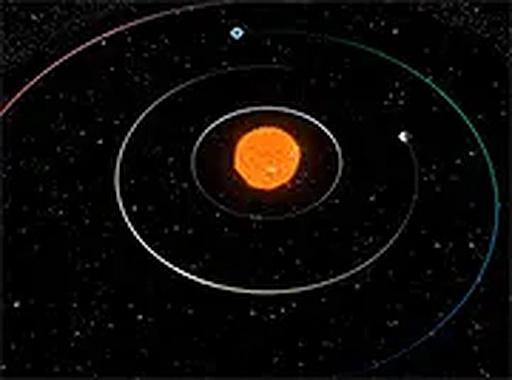
Planetarium 2 Solar System Explorer is a browser-based simulation that focuses on accurately modeling the orbital mechanics of our solar system. Unlike action-oriented space games, this tool emphasizes realistic planetary motion and visual clarity, allowing users to observe how each planet moves around the sun over time. The core objective is to provide an educational and relaxing experience—there are no scores, enemies, or time limits. It is designed for anyone interested in astronomy, from students to casual learners, offering a window into the dynamics of our cosmic neighborhood.
How to Play
Playing Planetarium 2 Solar System Explorer is straightforward and requires no setup. Users can click and drag to rotate their view of the solar system, and scroll to zoom in and out for closer inspection of individual planets or a wide perspective. Keyboard controls allow for smooth panning and adjusting the simulation speed, making it easy to observe long-term orbital patterns in seconds or focus on a single moment. The interface is intuitive, so users can start exploring immediately without a tutorial.
Game Features
Features include a realistic orbital simulation for all major planets, free browser-based play with no downloads required, and intuitive mouse and keyboard controls for zooming, rotating, and panning. The simulation speed is adjustable to see long-term patterns, and a pause function allows for detailed observation. The clean, educational interface is suitable for all ages, and the game works on modern desktop browsers like Chrome, Firefox, and Edge.
Tips for Success
To get the most out of Planetarium 2 Solar System Explorer, take time to explore each planet individually by zooming in and rotating the view. Experiment with the speed controls to see how inner planets orbit faster than outer ones, and use the pause function to study specific alignments. Regular observation helps build an intuitive understanding of orbital mechanics, making the experience both educational and enjoyable.